
Drawing a Bird Model
Lessons in Form, Light, and Observation
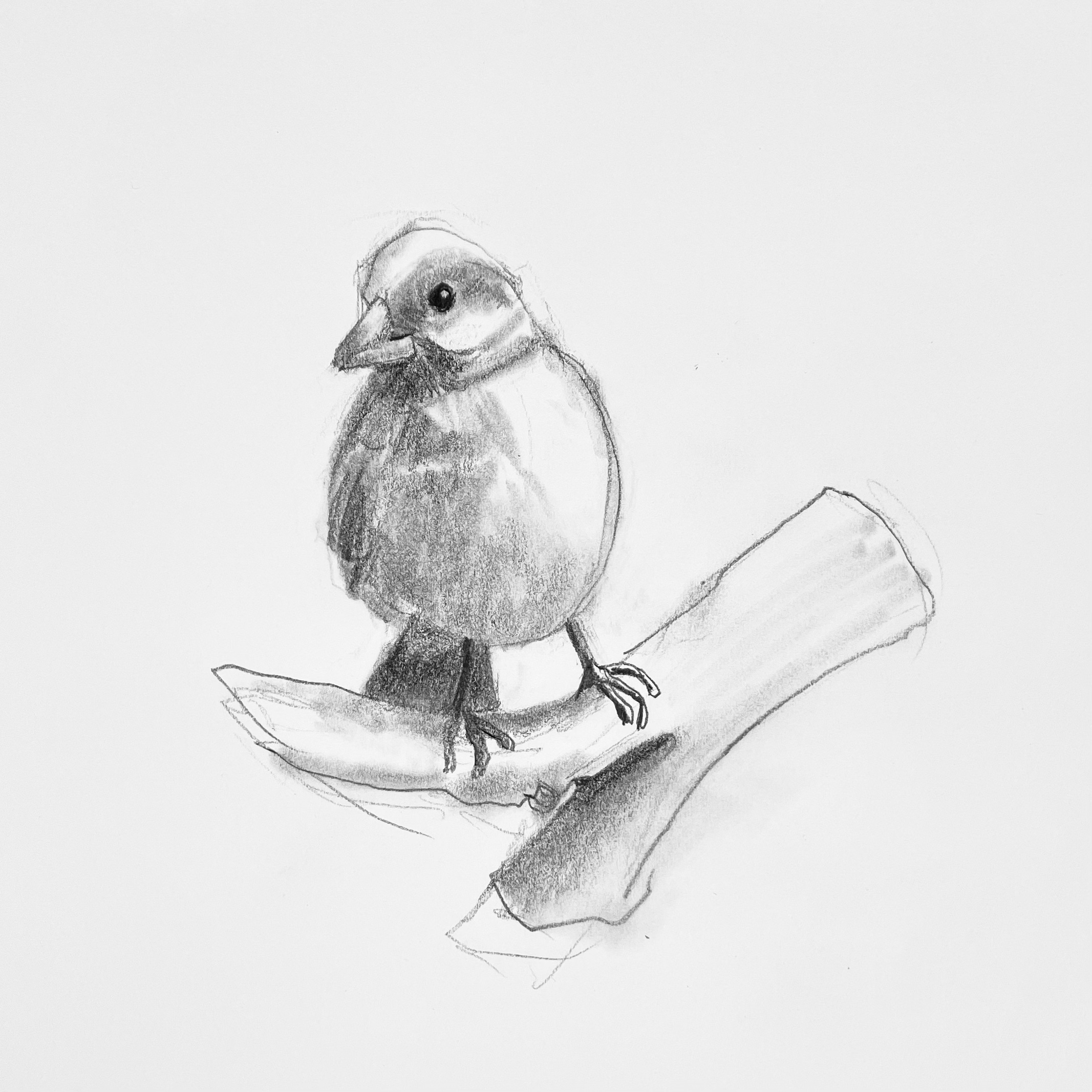
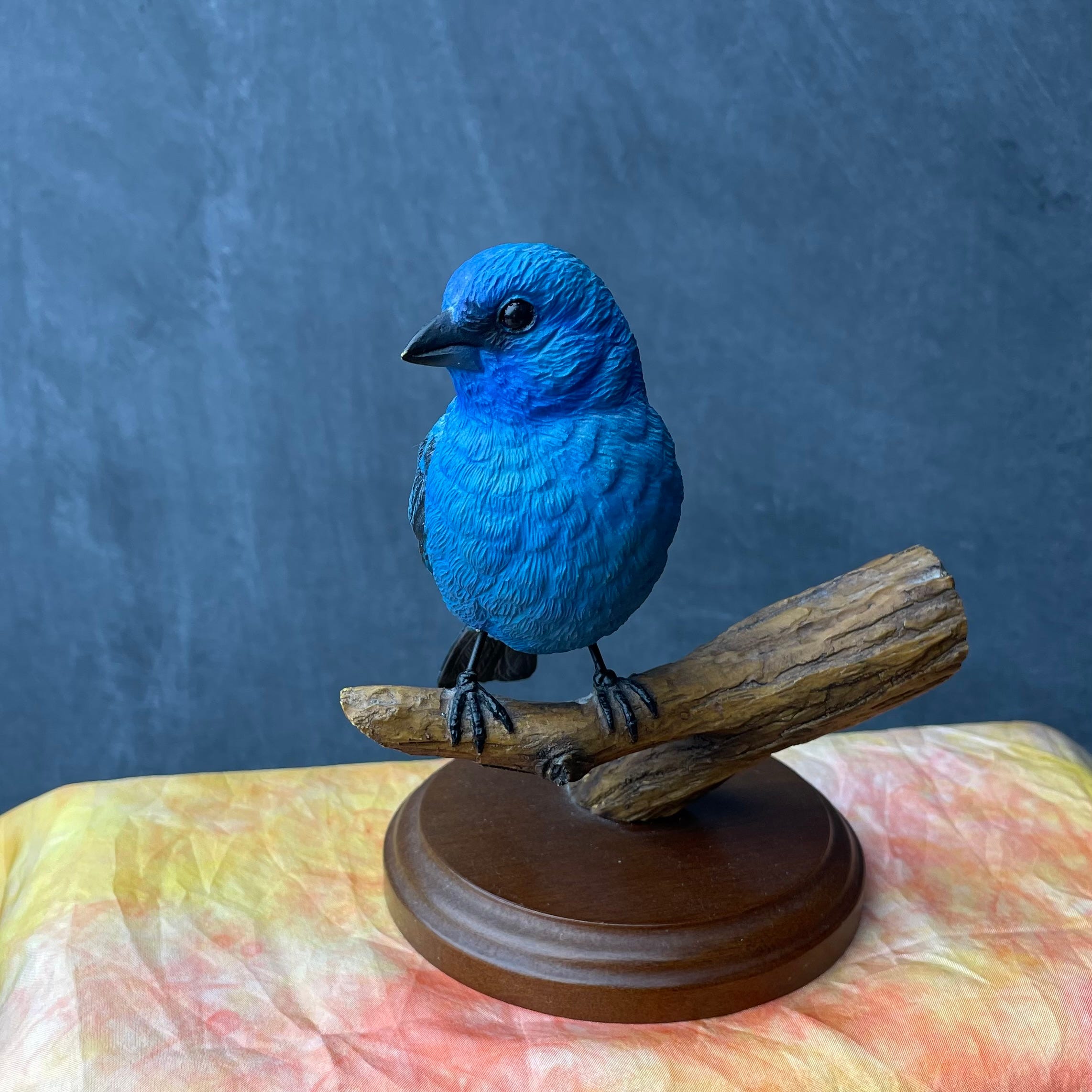
Lately, I’ve been sketching a bird model, an Indigo Bunting actually, as a way of practicing. I’ve always drawn from photographs so working with a model has been a wonderful way to grow and learn more about drawing birds. Not only can I have my subject very close (something that’s pretty much impossible to do with a live bird) but I can look at the bird from every conceivable angle. Even better, I can control the lighting. This still-life work is teaching me about form and volume in ways that I didn’t expect. Suddenly, I can see things that I was missing before, despite years of practice.
Rather than offering a set of instructions, I’d like to walk you through how I approach drawing this bird. These are the things I found myself noticing that I think might help you in your own sketching practice.
Settling In
First I sit with the model for several moments. By gazing at it with soft eyes and focusing on my breath, I can start to quiet my narrating, chattery mind.
Finding the First Shape
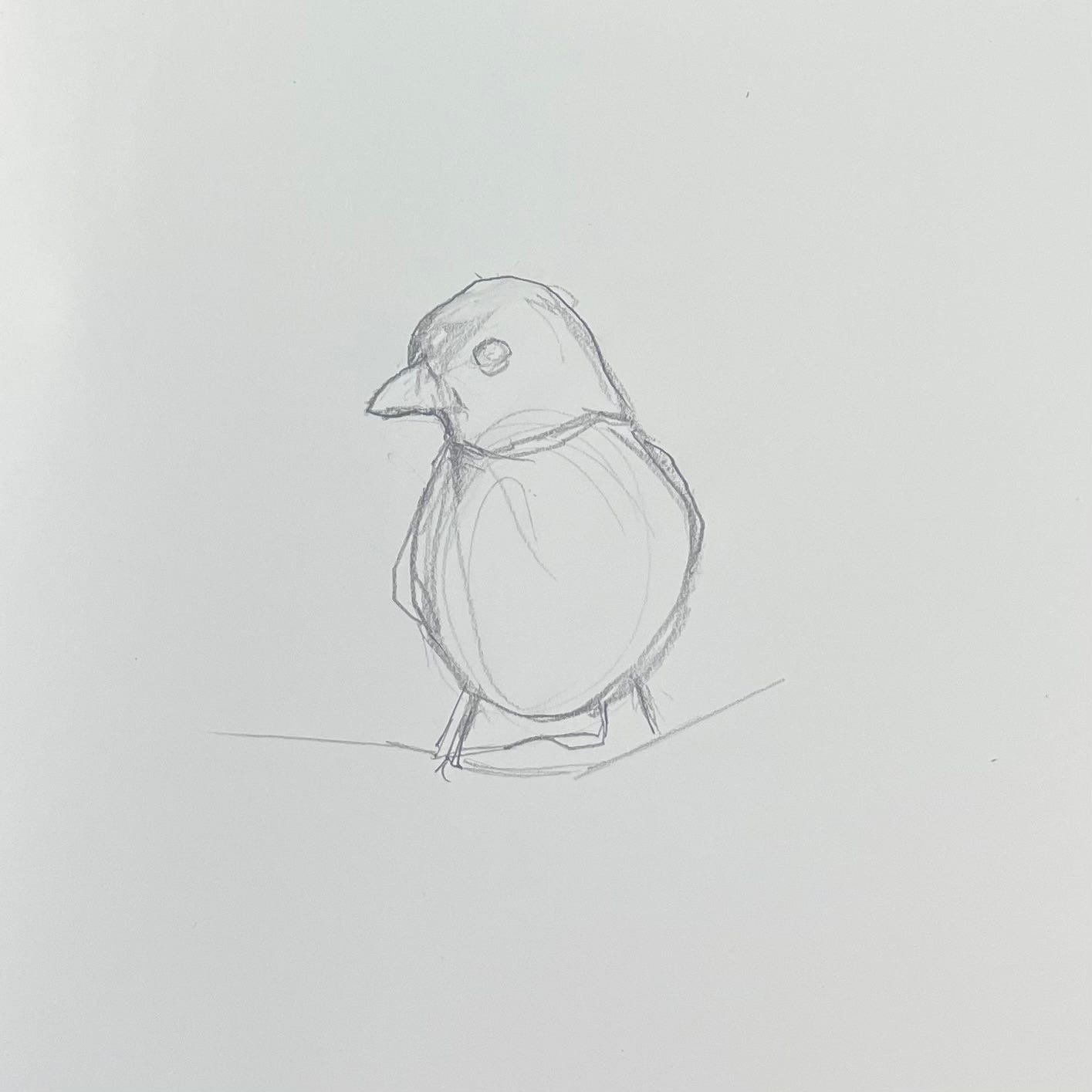
Next, I look for the simplest large shape. Here, the chest and belly can be described as one large, rounded oval. I allow my eyes to trace the edges of the silhouette of this large shape.
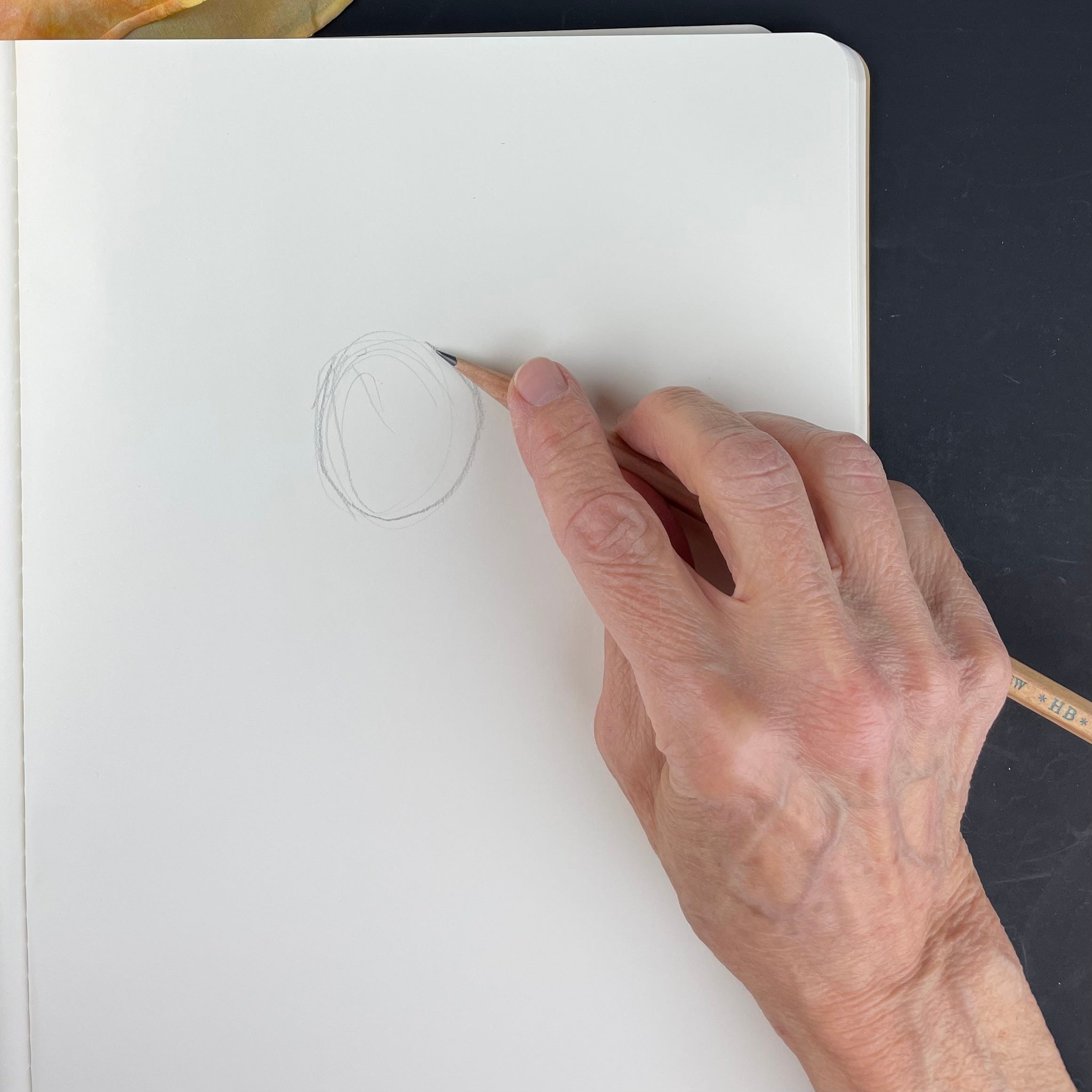
For this part of my drawing, I prefer an overhand grip and to draw with the side of the pencil rather than the point. I allow the stroke to go around and around, gently refining the overall shape as I go. In this way, the shape emerges from the movement of my hand as I gaze at the model. My eye might stray briefly to the page but I quickly bring it back to the model. The goal here is to allow my eyes and hands to communicate directly with each other without any interference from my thinking mind.
Adding the Head
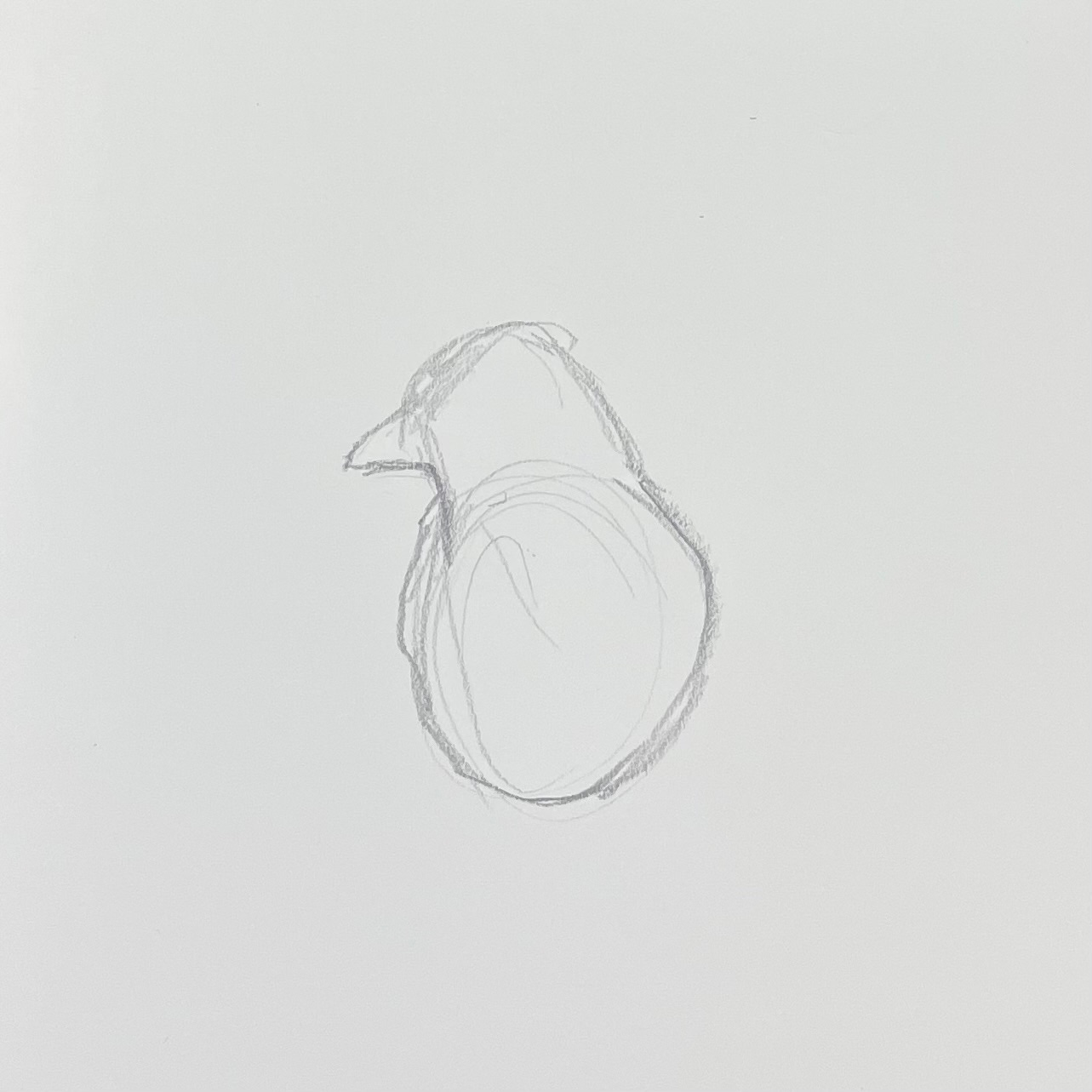
Once I’ve gotten a loose outline in place for the chest and belly, I move on to the next big shape: the head. Ignoring the bill, I use a light stroke to define an oval shape. Once I have an oval that approximates the rounded shape of the head, I follow the silhouette and refine the entire shape very loosely. I rough in the silhouette of the bill that protrudes from the head shape. Often, my mind is getting quiet and I’m less aware of making decisions. This tells me that my eye and hand are having a nice chat without me.
Looking for Smaller Forms
At this point,I switch to a pencil grip and hold the pencil at about the halfway point of the barrel. This gives me a bit more control but keeps the touch light. I let my eye rove around the model and rough in the remaining big features — in this case, the tail and the legs. I ignore the feet for the time being.
I start looking for smaller shapes on the head like the ear patch, the eye, and places where the form of the head intersects the form of the chest. I lay down more defined lines that clarify all the other shapes. I can always tell that things are going well if the lines are more expressive and confident.
Following the Shadows
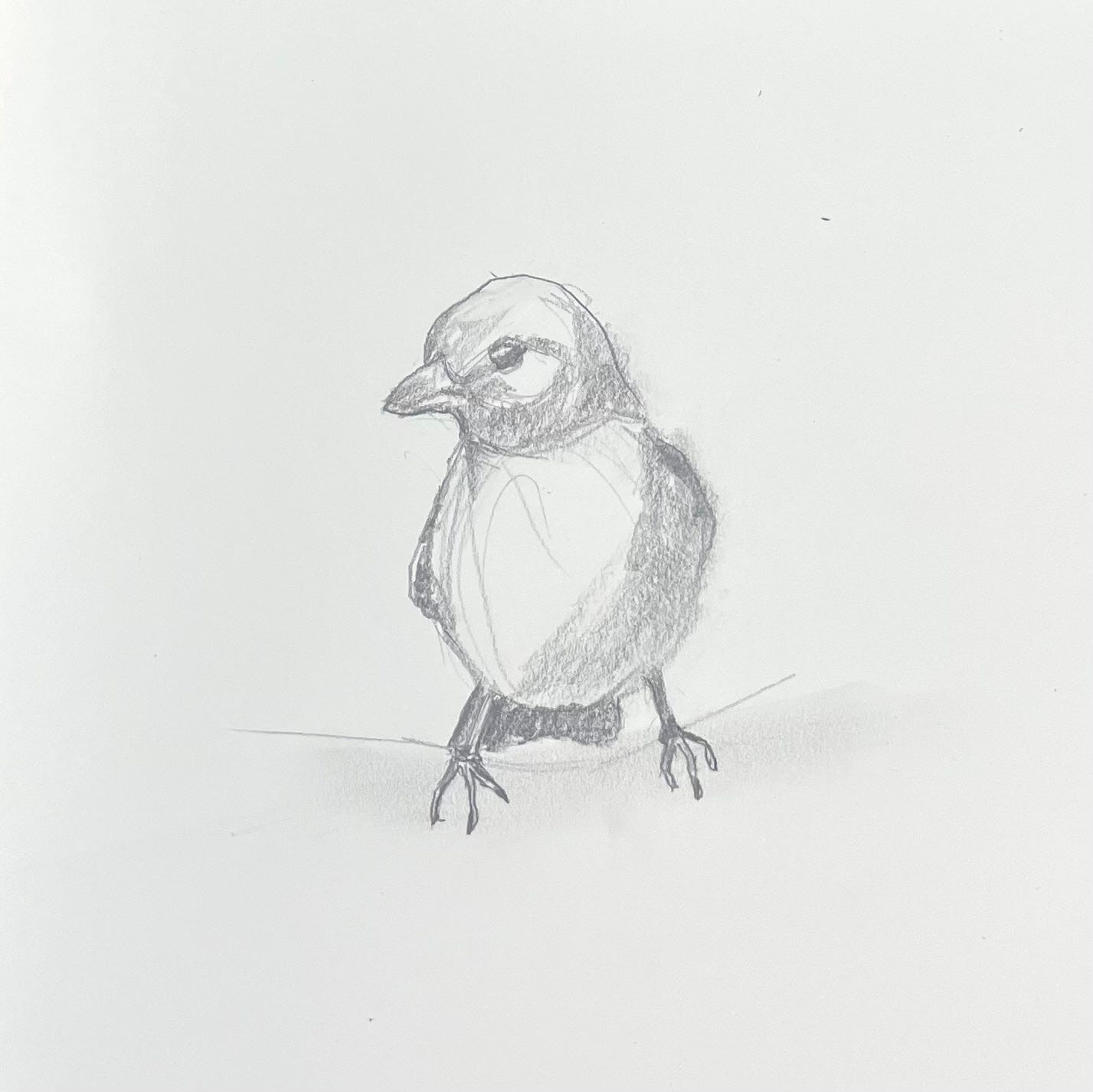
I go back to the overhand grip and map in the shadow shapes. This is where working with the model really pays off. Controlled lighting shows the form so much more distinctly than photos usually do. And when I’m uncertain about the form, I can peek around the side of the model to better understand the three-dimensional shape.
For a little study like this, I’m almost done. I shade in the shadow values but I don’t stress too much over these.
Conclusion
You may have noticed that I don’t do any measuring of proportions or angles. I have a very important reason why: measuring invites my analytical brain back in. That shift from seeing to thinking interrupts the conversation between my hand and my eyes. I tighten up and start second-guessing my choices. And almost inevitably, the life drains out of my drawing.
You don’t need a bird model to try an exercise like this. Slowing down, quieting your mind, and creating a setting for your hand and eye to chat are all important skills in their own right. Any small object with an interesting form can become a teacher and give you a new perspective. And being fully present with what’s in front of you is a gift all by itself.
🪶 One of the great advantages of working from a model is that you can study it from different viewpoints and discover new things each time you look. For Insiders, I’ve included additional photographs of the Indigo Bunting model along with several observation-based drawing prompts that build on the ideas explored in this essay.
